Flight
The drone flies the whole site.
It plans a route that covers every asset, flies it without a pilot, and replans around cranes, vehicles and people. Anything that looks wrong gets a second, closer pass from another angle.
Autonomous drones for industrial sites
Sirocco drones fly industrial sites on their own, check every asset with thermal and visual cameras, and send each fault to a dashboard with its location, its severity and the repair it needs.
How sites are checked
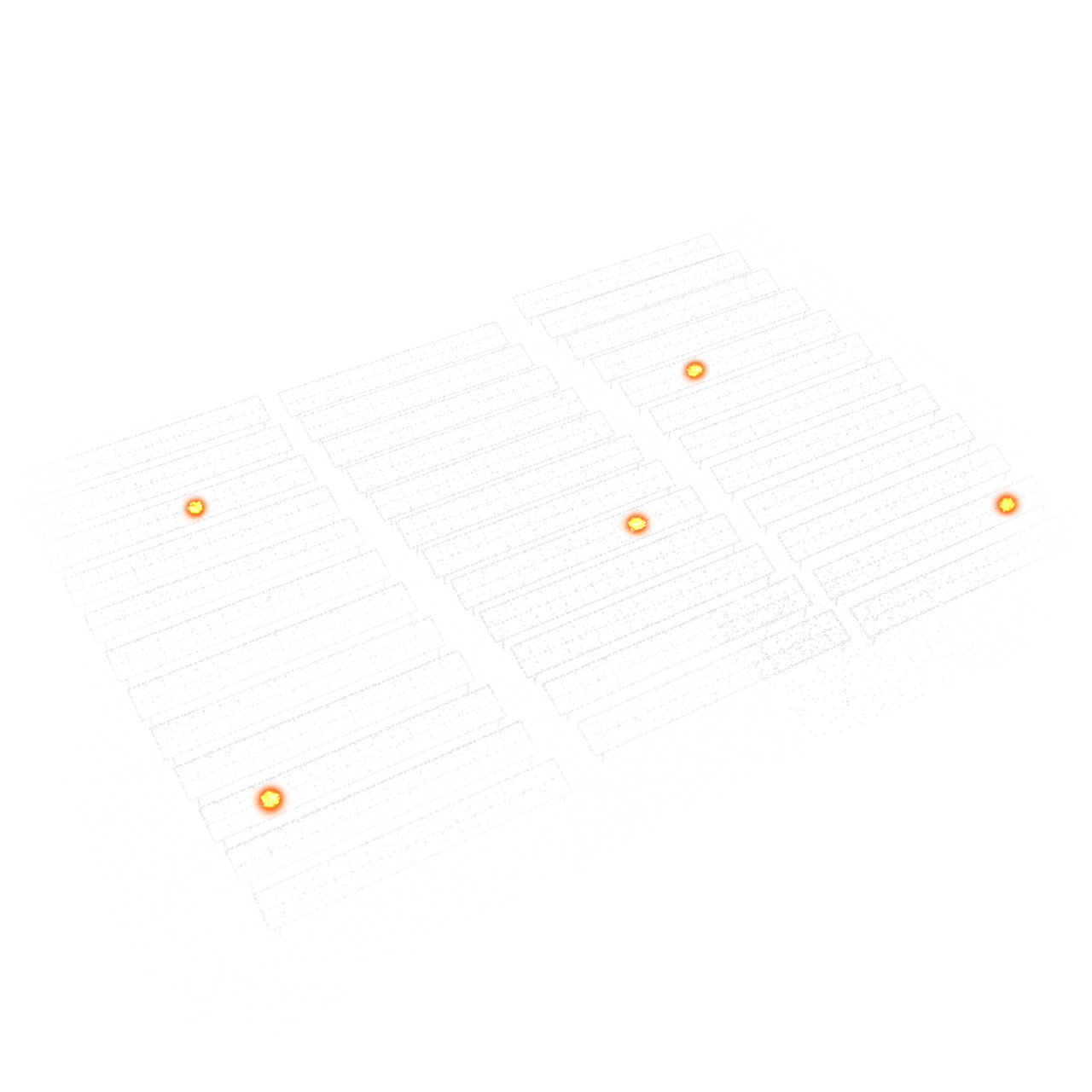
A 100 MW solar farm has well over 150,000 panels.
Checking them means technicians walking the rows with handheld thermal cameras, or a pilot flying a drone and an analyst going through tens of thousands of images afterwards.
In refineries, tank farms and on offshore platforms, the same checks need scaffolding, rope-access teams, or part of the plant shut down while people climb in. So they happen less often than they should, and faults grow in between.
How it works
The drone plans and flies the route. The software finds and ranks the faults. Your team decides what gets repaired.
Select a stage to explore it.
It plans a route that covers every asset, flies it without a pilot, and replans around cranes, vehicles and people. Anything that looks wrong gets a second, closer pass from another angle.
Each finding is tied to a specific asset, rated by severity, and compared with earlier flights, so a panel that is getting hotter stands out from one that has always run warm.
A manager picks the faults worth acting on. Each becomes a work order for the right crew, with photos, thermal readings and the exact location of the asset.
Capabilities
The same system works on an open solar farm and inside a refinery. What changes is how the drone finds its way.
Give it the site boundary. It plans a route that covers every asset, flies it, and replans around anything in the way.
Between tanks, under platform decks and inside buildings, it navigates by LiDAR and a map it builds as it flies.
Thermal cameras catch hot spots, failed connections and damaged insulation. High-resolution cameras catch cracks, corrosion and broken parts.
When something looks wrong, it flies back for a closer view from another angle before reporting it.
A finding is not a photo with coordinates. It is panel 14 in string B7, or the third flange on pipe rack 2.
It flies the same route each time, so a crack that grew or a panel running hotter than last month shows up as a change.
Sites
On a solar farm the difficulty is scale: tens of thousands of identical panels. In a refinery or on an offshore platform it is access: tight, tall structures, often out of GPS reach. Sirocco handles both.
Scale
The drone sweeps every row and finds hot spots, cracked cells, failed bypass diodes, soiling and dead strings. Each fault arrives on the dashboard with its row, string and panel number.
Access
Refineries, chemical plants, tank farms and offshore platforms. The drone flies between and inside structures to check welds, corrosion, insulation and supports that would otherwise need scaffolding or rope access.
About
Sirocco builds autonomous drones and the software behind them: they inspect industrial sites and tell maintenance teams what needs repair. Each flight brings together visual and thermal findings so teams can identify faults, prioritize repairs, and track changes over time.
Pilots
Operators and maintenance teams of solar farms, plants and offshore assets: tell us what you inspect, how often, and what it takes today.